
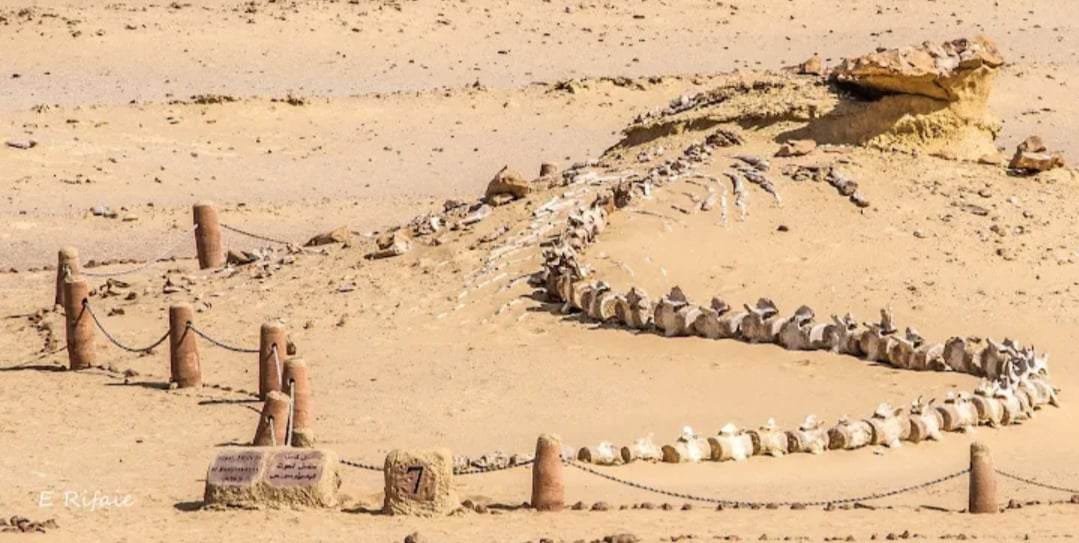
Wadi El Hitan, or the Valley of the Whales, is a breathtaking UNESCO World Heritage Site in Egypt’s Faiyum Desert, world-famous for its 40-million-year-old whale fossils. Known as the cradle of whale evolution, this desert valley reveals the incredible transformation of ancient whales (archaeoceti) from land mammals into ocean dwellers—complete with flippers and vestigial hind legs.
Discovered in 1902 and excavated extensively since the 1980s, Wadi El Hitan holds hundreds of fossils of whales, sea cows, crocodiles, sharks, and turtles spread across 200 km² of beautifully eroded cliffs and valleys. The site also features the Middle East’s first fossil museum, eco-friendly tourism facilities, and captivating desert scenery—offering a rare glimpse into Earth’s distant past.
Why Wadi El Hitan Is So Special
Often called the world’s most important fossil site, Wadi El Hitan provides unparalleled insight into the evolution of whales. Its fossils are preserved in perfect condition, protected within a remote desert landscape that has remained largely untouched for millions of years.
This “open-air museum” showcases the Eocene period, when this area was once a shallow, tropical sea teeming with marine life. Walking through the valley today feels like stepping into a time capsule—where ancient bones still lie exposed in the golden sands.
A Journey Through Time: The History of Discovery
The first fossils were unearthed in 1902 by British geologist H. J. L. Beadnell, but the site remained inaccessible for decades due to its remote location. In the 1980s, renewed expeditions by Egyptian and American paleontologists uncovered over 400 skeletons of whales and sea cows.
Among the most extraordinary finds were fossils of aquatic whales with hind limbs—the first direct evidence of whales’ land-based ancestry. The largest skeleton found measures 21 meters, showing both flippers and small hind legs, proving their evolutionary transition.
Fossils of crocodiles, sharks, turtles, and rays have also been discovered, allowing scientists to reconstruct the ancient ecosystem that existed here 40 million years ago.
Location & How to Get There
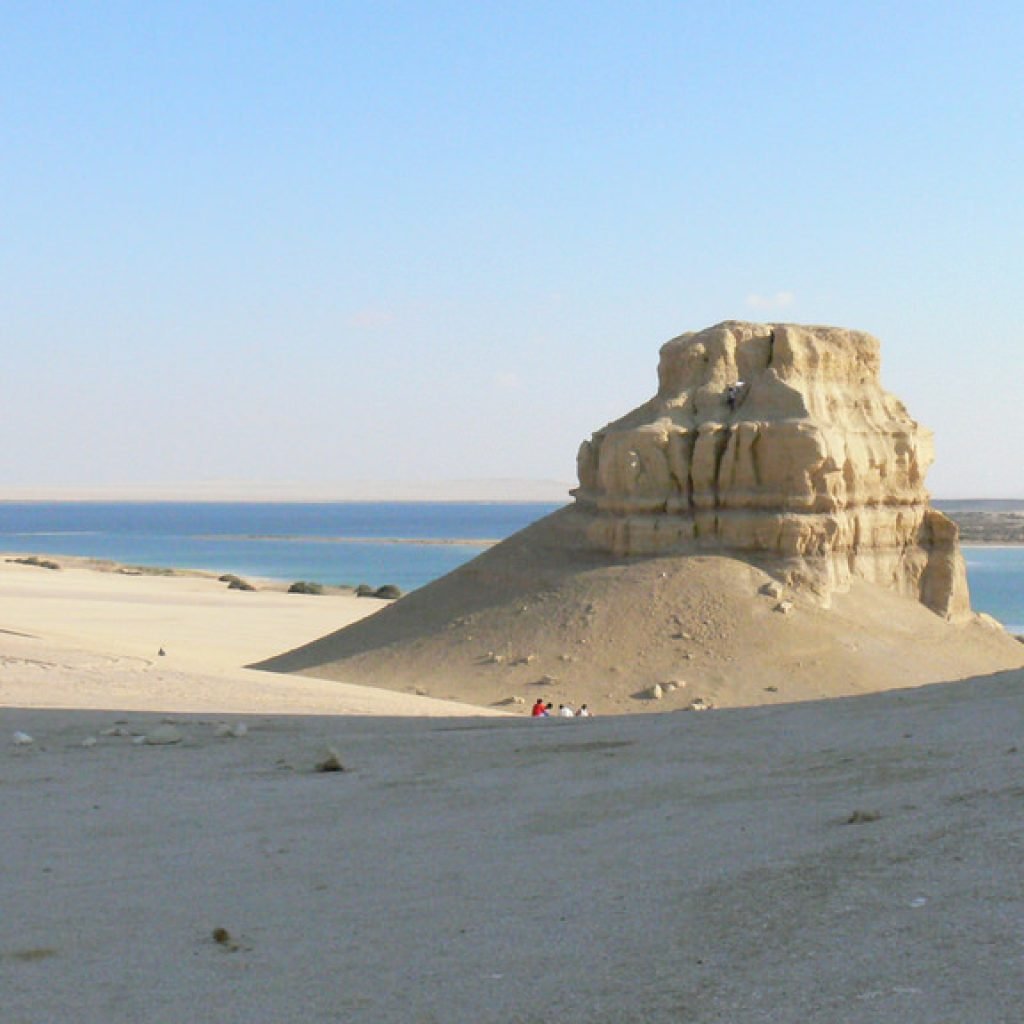
Wadi El Hitan National Park is located in the Faiyum Governorate, about 150 km (93 miles) southwest of Cairo—roughly a 3-hour drive. It lies within the Wadi El Rayan Protected Area, near the dramatic Garet Gohannam (“Mountain of Hell”).
Travelers can reach it via organized desert tours from Cairo or Fayoum. Once there, guides offer interpretive walks through the fossil beds and geological formations that make this site so unique.
The Fascinating Fossils of Wadi El Hitan
Within this vast fossil field lie the remains of Basilosaurus and Dorudon—two ancient whale species that mark the evolutionary link between land mammals and modern cetaceans. The valley contains more than 1,500 marine vertebrate fossils, including:
- Whales and sea cows with visible hind limbs and flippers
- Sharks, rays, and bony fish from the ancient sea
- Crocodiles, turtles, and sea snakes
- Fossilized nummulite shells and ancient seagrasses
- The oldest known pelican fossil, dating back to the late Eocene
Each fossil is preserved with remarkable clarity, creating one of the most comprehensive records of marine life from this era found anywhere on Earth.
The Geology of Wadi El Hitan
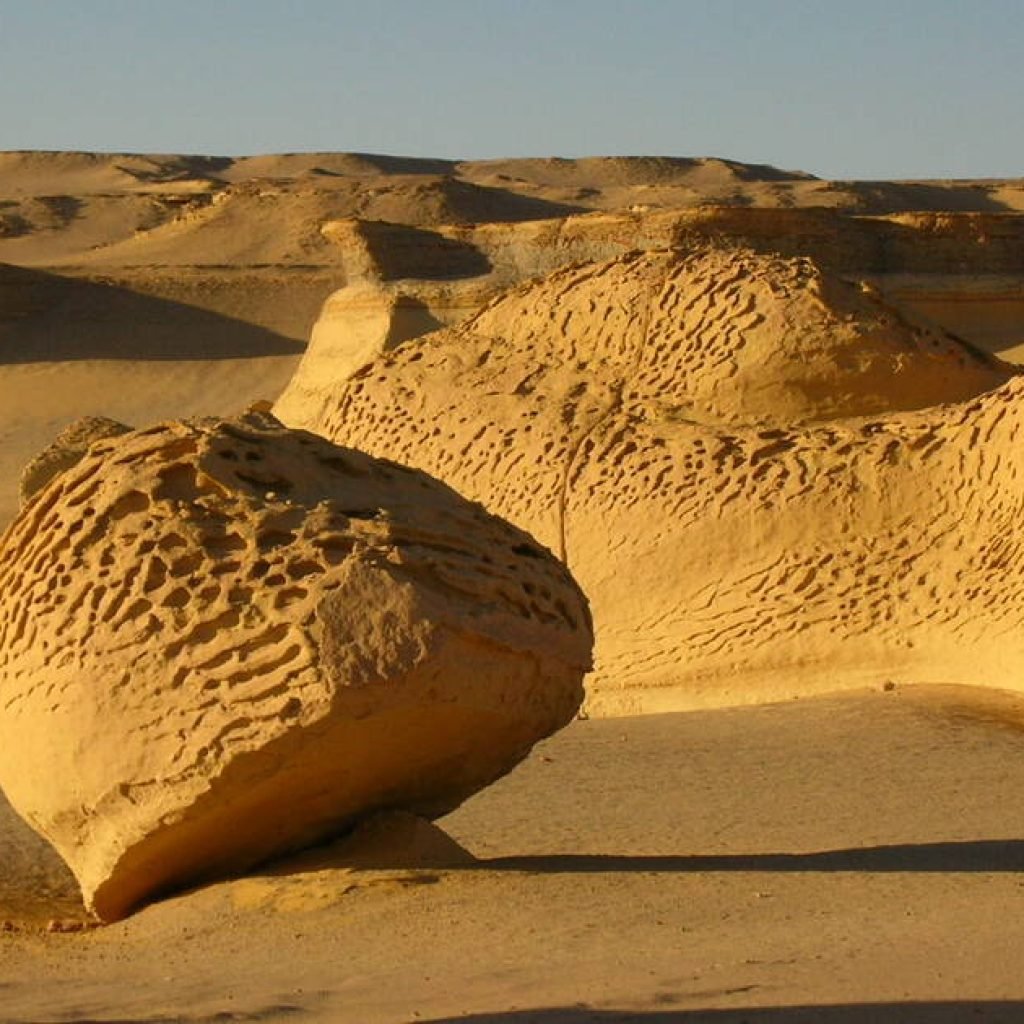
Wadi El Hitan’s landscape is sculpted by millions of years of wind and water erosion, forming breathtaking cliffs, buttes, and rock layers. The main geological formations include:
- Gehannam Formation – Marine mudstones containing whale fossils
- Birket Qarun Formation – Yellowish sandstones forming cliffs and buttes
- Qasr El Sagha Formation – Dark mudstones mixed with fossil-rich limestone from ancient lagoons
These formations reveal how the region once shifted from shallow coastal waters to deeper marine environments over time.
Wildlife in the Desert
Beyond fossils, Wadi El Hitan and the surrounding Wadi El Rayan Protected Area host impressive biodiversity. Visitors may encounter:
- 15 desert plant species
- 15 species of mammals, including red foxes, Egyptian wolves, and the playful fennec fox
- 36 species of breeding birds and 19 species of reptiles
This rich ecosystem makes it not only a paleontological wonder but also a living desert sanctuary.
The Fossil & Climate Change Museum
At the heart of the site stands the Wadi El Hitan Fossil and Climate Change Museum—the first museum in the Middle East dedicated entirely to fossils. Built partially underground to blend with the landscape, it features a stunning 18-meter-long skeleton of a legged whale, fossil exhibits, and interactive displays on climate evolution.
Developed in collaboration with the Egyptian Ministry of Environment, UNDP, and the Government of Italy, the museum promotes sustainable tourism while preserving Egypt’s scientific and natural heritage.
Camping & Eco-Tourism
For an unforgettable experience, visitors can camp inside the park and enjoy the serenity of the desert night sky. Eco-friendly tourism is encouraged, and local guides offer sustainable camping experiences that minimize environmental impact.
Camping under the stars at Wadi El Hitan offers a rare chance to connect with nature and history at once—surrounded by the silent remnants of creatures that once ruled the seas.
Why You Should Visit
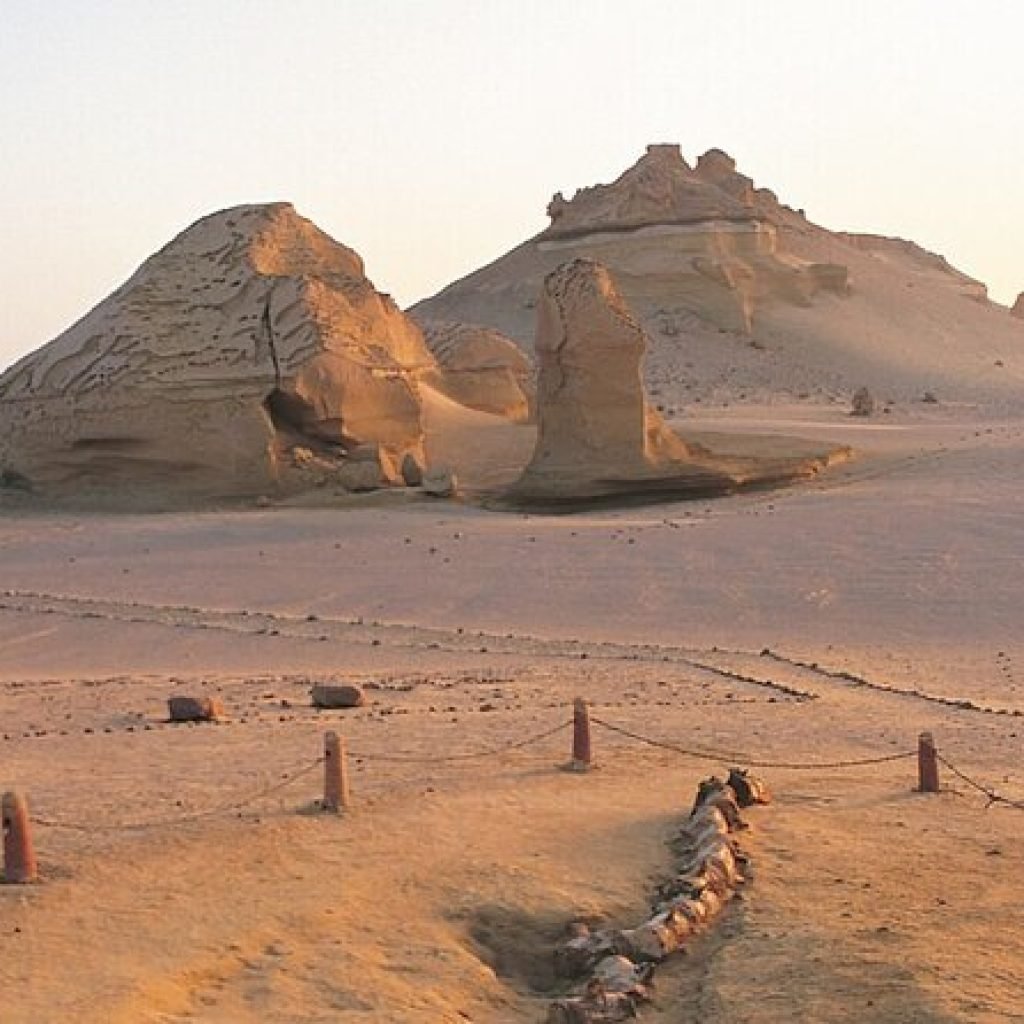
Wadi El Hitan isn’t just a fossil site—it’s a window into Earth’s past. Its untouched desert landscape, scientifically priceless fossils, and remarkable scenery make it a must-visit for nature lovers, adventurers, and history enthusiasts alike.
Whether you’re exploring the museum, hiking the fossil trails, or camping beneath the Milky Way, Wadi El Hitan promises an awe-inspiring journey through time.

Comment (0)